
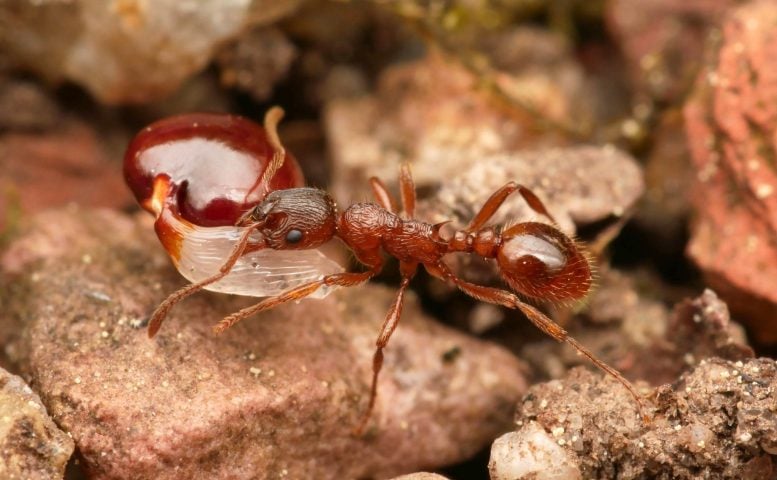
A scientist from Mainz University delves into the root causes of the global decline in insect populations and the implications of this decline, as well as potential solutions to the problem.
Globally, we are observing not only a decrease in the population of individual insects but also a collapse in insect biodiversity. The primary factors contributing to this alarming trend include increased land use for agricultural and construction purposes, climate change, and the introduction of invasive species due to human trade activities. These key findings were highlighted in a recent special feature on insect decline published in Biology Letters. PD Dr. Florian Menzel, from the Institute of Organismic and Molecular Evolution at Johannes Gutenberg University Mainz (JGU), is one of the three editors of this special feature.
“As evidence of an ongoing global crash in insect populations increased over the last few years, we decided it was time to edit and publish this special issue. Our aim was not to document insect population declines but to better understand their causes and consequences,” said Menzel.
Together with forest entomologist Professor Martin Gossner of the Swiss Federal Institute for Forest, Snow and Landscape Research (WSL) and biologist Dr. Nadja Simons of TU Darmstadt, Menzel contacted international researchers in order to collate the information they could provide on insect declines and to stimulate new studies on the subject. The special issue authored by Menzel, Gossner, and Simons includes 12 research-related articles, two opinion papers, and an extensive editorial.
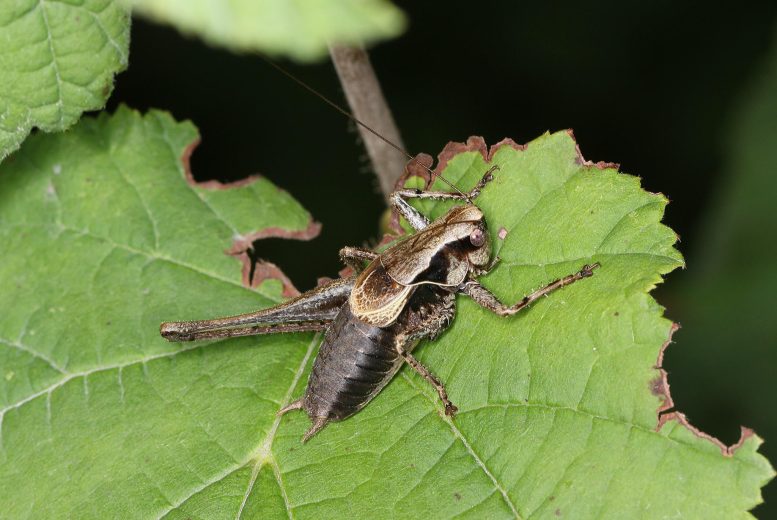
More Extensive Use of Land, Climate Change, and Invasive Species Are the Main Causes of Insect Decline
“In view of the results available to us, we learned that not just land-use intensification, global warming, and the escalating dispersal of invasive species are the main drivers of the global disappearance of insects, but also that these drivers interact with each other,” added Menzel.
For example, ecosystems deteriorated by humans are more susceptible to climate change and so are their insect communities. Added to this, invasive species can establish easier in habitats damaged by human land-use and displace the native species. Hence, while many insect species decline or go extinct, few others, including invasive species, thrive and increase. This leads to an increasing homogenization of the insect communities across habitats.
“It looks as if it is the specialized insect species that suffer most, while the more generalized species tend to survive. This is why we are now finding more insects capable of living nearly anywhere while those species that need specific habitats are on the wane,” Menzel pointed out.
The consequences of this development are numerous and generally detrimental for the ecosystems. For example, the loss of bumblebee diversity has resulted in a concomitant decline in plants that rely on certain bumblebee species for pollination.
“Generally speaking, a decline in insect diversity threatens the stability of ecosystems. Fewer species means that there are fewer insects capable of pollinating plants and keeping pests in check. And, of course, this also means that there is less food available for insect-eating birds and other animals. Their continued existence can thus be placed at risk due to the decline in insect numbers,” emphasized Menzel.
In their editorial, Menzel, Gossner, and Simons suggest ways in which we can best respond to the effects that their gathered data has revealed. They advocate a particular approach for future research into insect decline. Standardized techniques should be employed to monitor insect diversity across many habitats and countries, the more so as in many regions of the world we still don’t know how the insects are doing.
The researchers also propose the creation of a network of interconnected nature reserves such that species can move from one habitat to another. Less heat-tolerant insects would thus be able to migrate from areas where global warming is causing temperatures to rise to higher elevations or cooler regions in the north. Furthermore, we need measures to reduce the dispersal of invasive animal and plant species through our globalized trade and tourism.
“This is another problem that has become extremely serious in the last decades,” concluded Menzel. One example cited in the current special issue is the invasion of non-native insectivorous fishes in Brazil that has caused a major decline in freshwater insects.
Reference: “Less overall, but more of the same: drivers of insect population trends lead to community homogenization” by Martin M. Gossner, Florian Menzel and Nadja K. Simons, 29 March 2023, Biology Letters.
DOI: 10.1098/rsbl.2023.0007
Never miss a breakthrough: Join the SciTechDaily newsletter.
Follow us on Google and Google News.
2 Comments
PHOLIDOPTERA!!
What, nobody watched Biodome? This article hit home for me, as I was just looking for how to kill ants and mosquitoes. I need to change the climate.
Oh my God! People will starve.